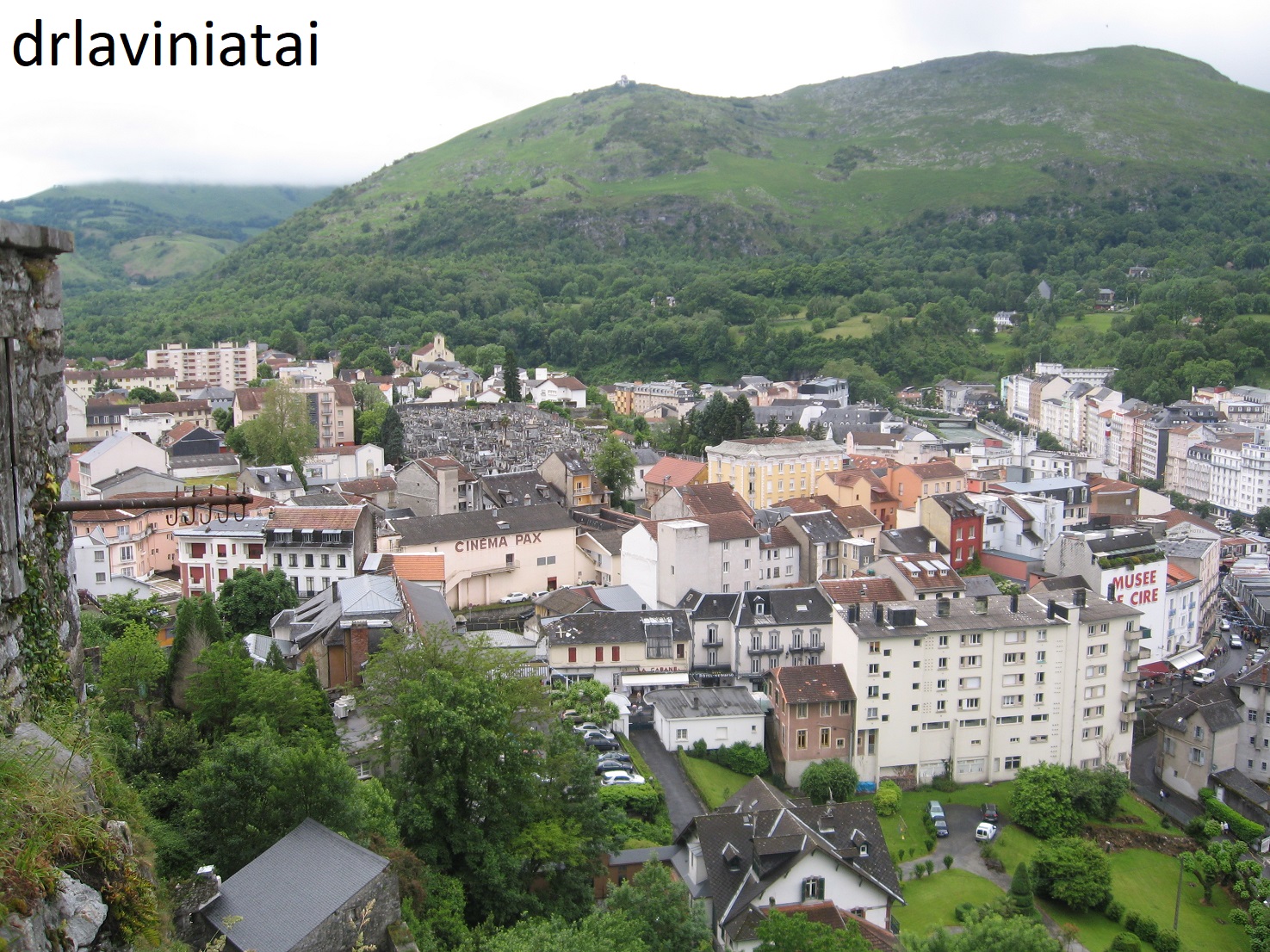
Wednesday, July 28, 2010

THE CRYPT

The Crypt (La Crypte) in Lourdes, France

Situated between the The Basilica of the Immaculate Conception and the Rosary Basilica is the Crypt which stands on the Rock of Massabielle. Built between the years 1863 and 1866, it was the first of the churches to be completed in the Sanctuary of Our Lady of Lourdes in response to the request of Our Lady during the thirteenth apparition, "Go and tell the priests to build a chapel here." The construction of the Church was initiated by Father Peyramale, the parish priest of Lourdes. Building work started on 13 September 1863 under the supervision of Hippolyte Durand, a French architect who specialized in medieval church architecture. The new church was consecrated on 19 May 1866 by Monsignor Laurence, the Bishop of Tarbes and Lourdes, in the presence of Bernadette. Her departure for the convent of Saint Gildard in Nevers was delayed so that she could witness this special consecration ceremony. Francois Soubirous (Bernadette's father), who had worked on its construction, was also present to witness its official opening.

The Main Altar

The Crypt has three naves with Gothic vaulted ceilings and can accommodate 120 people. Its notable feature are its 28 Pyrenean marble columns which support the weight of the Basilica of the Immaculate Conception constructed atop the Crypt. The high altar was restored in 1966. Above the altar, there is a statue of the Virgin Mary and Child Jesus with a golden halo sculpted by the French sculptor, Joseph-Hugues Fabisch, in 1868. The Church contains four chapels dedicated to the Sacred Heart of Jesus, Saint Joseph, Saint Peter, and Saint John the Evangelist. Bernadette's fifth right rib, which was removed from her body in 1925 when her body was exhumed for a third time, can also be found in the Crypt.

The Chapel dedicated to the Sacred Heart of Jesus

The Chapel dedicated to Saint Joseph

The Chapel dedicated to Saint Peter

The Chapel dedicated to Saint John the Evangelist

Hewn out of the rock, the Crypt is beautiful but has to be unusually small in order to enhance its stability. Prior to the year 1904, visitors could only enter the Crypt by way of two underground passages. However, these passages were closed for the purpose of strengthening the foundations of the Basilica of the Immaculate Conception constructed above the Crypt. Today, visitors can enter the Crypt through a corridor in the central passage. At the entrance, visitors will be able to see statues of St. Peter holding the Keys of Heaven, Pope Pius X administering the sacrament of Eucharist, and St. Bernadette depicted as the poor shepherd girl of Bartres.

Statue of St. Peter holding the Keys of Heaven

Statue of Pope Pius X administering the Eucharist

Above the entrance of the Crypt is a mosaic medallion of Pope Pius X holding a parchment in his hands with the words "To Mary Immaculate". Outside the Crypt is the church courtyard below which is the Rosary Basilica. From the church courtyard, visitors can see the Grotto, the Gave de Pau River flowing past the Grotto, the Castle of Lourdes, and most of the town of Lourdes.

The Crypt is a place of silence where we can reflect upon our own lives and get closer to God through personal prayer. As what Cardinal Robert says, "Through silence, we return to our heavenly origin, where there is nothing but calm, peace, repose, silent contemplation, and adoration of the radiant face of God. The importance of silence is clearly emphasized in his book entitled The Power of Silence: Against the Dictatorhip of Noise.

You may also like to read THE PARISH CHURCH OF LOURDES, BASILICA OF SAINT PIUS X, and THE CHURCH OF SAINT BERNADETTE. To view the content page of this blog, please click here.


References:
1.  Lourdes & Bernadette. Publisher "il Calamo"
2.  Lourdes. Doucet Publications.
3.  Discover Lourdes. MSM.
4.  The Power of Silence: Against the Dictatorship of Noise. Ignatius Press.


Tuesday, July 20, 2010

THE BASILICA OF THE IMMACULATE CONCEPTION

The Basilica of the Immaculate Conception of Lourdes

Located at Avenue Mgr Theas, Le Sanctuaire, 65100 Lourdes, France, the Basilica of the Immaculate Conception (Basilique de L'lmmaculee-Conception de Lourdes) is a Roman Catholic Church within the Sanctuary of Our Lady of Lourdes, the area surrounding the Grotto of Massabielle. It is also known as the Upper Basilica because it can be seen above the Rosary Basilica and the Crypt. Built on top of the rock of Massabielle above the Grotto, the neo-Gothic style Basilica was designed by architect Hippolyte Durand. Constructed between the years 1866 and 1871, it was the second of the churches to be completed and was officially opened for worship on 15 August 1871. It was consecrated on 2 July 1876 by Cardinal Joseph-Hippolyte Guibert, the Archbishop of Paris. Thus the Virgin Mary's request during the thirteenth apparition, "Go and tell the priests to build a chapel here" was granted. That was also the reason why the Church was named the Basilica of the Immaculate Conception.

The stained-glass windows of the Basilica

The Interior of the Basilica

The Basilica of the Immaculate Conception can hold about 600 people. 51 metres long, 21 metres wide and 19 meters high, it has a single nave lit with colors from stained-glass windows. The series of stained-glass windows of the Basilica illustrate the story of the Immaculate Conception from the Terrestrial Paradise right up to the promulgation of the Dogma of the Immaculate Conception by Pope Pius IX on 8 December 1854. The scenes on the upper part of the nave to the left begin with the expulsion of Adam and Eve from the Garden of Eden after committing original sin followed by scenes from the Old Testament relating to the Immaculate Conception. The scenes on the upper part of the nave to the right depict events from the New Testament and the history of the Church. On the lower part of the nave are 23 chapels each with its own stained-glass window illustrating the important events relating to the apparitions in Lourdes as well as the history of Lourdes. These beautiful stained-glass windows were designed and made by the French painter and illustrator, Laurent Gsell, according to the guidance of Canon Lambert from Paris.

The Chapel of Saint Peter

The Chapel of Saint Francis of Assisi

The Chapel of Saint Germaine

The high altar is made of white Carrara marble. On the left of the presbytery is the white Carrara marble statue of Our Lady of Lourdes sculpted by the French sculptor, Emilien Cabuchet. There are five more chapels around the chevet dedicated to Our Lady of the Rosary, Our Lady of La Salette, Our Lady of Victories, Our Lady of Mount Carmel, and Our Lady of Pontmain respectively.

The High Altar of the Basilica

The White Carrara Marble Statue of Our Lady of Lourdes

The exterior is dominated by a 70-metre high Gothic bell tower which rises about 100 metres above the Gave de Pau River. Above the Gothic portal is a mosaic medallion depicting Pope Pius IX, who promulgated the infallible dogma of the Immaculate Conception on 8 December 1854. The Basilica clock plays the "Ave Maria" every hour and chimes the hours with a 2-tonne bell named Jeanne-Alphonsine. The Basilica has four bells - the other bells in the tower are called Genevieve-Felicie (1800 kg), Hermine-Benoete (1100 kg), and Cecile-Gastine (800 kg).

The Exterior of the Basilica

The 70-meter Gothic Spire of the Basilica

You may also like to read THE PARISH CHURCH OF LOURDESLOURDES: MIRACLES AND THE MIRACULOUSLY HEALED, and CHRONOLOGY OF EVENTS IN LOURDES. To view the content page of this blog, please click here. There is a complete list of my articles about Lourdes on this page.


References:
1.  Lourdes. Doucet Publicatins.
2.  Lourdes & Bernadette. Publisher "il Calamo"
3.  Discover Lourdes. MSM.


Friday, July 9, 2010

BASILICA OF SAINT PIUS X

A scenic view of the oval Basilica of St Pius X from the Castle of Lourdes

In order to accommodate the ever-increasing number of pilgrims and tourists to Lourdes, the Basilica of Saint Pius X (Basilique Saint Pie X), which is nearly the size of Saint Peter's Basilica in Rome, was built in 1956 and completed in 1958. Dedicated to Pope Pius X, it is one of the largest Roman Catholic churches in the world. Located at 97 Boulevard Remi Sempe, 65100 Lourdes, the large oval Basilica is entirely underground and that is why it is also  known as the 'Underground Basilica'. Entering through St. Michael's Gate, the Basilica of Saint Pius X can be found on the left side of the Esplanade. Pilgrims can enter the Basilica through its six entrances. The main entrance is on the Esplanade facing The Chapel of St. Joseph. 201-metre long and 81-metre wide, the Basilica has an area of 12000 square metres and an inside perimeter of about 475 metres. It can hold about 25000 people. The Basilica of Saint Pius X was consecrated by Cardinal Angelo Giuseppe Roncalli on 25 March 1958 to celebrate the centenary of the apparitions. He became Pope a few months later, taking the name John XXIII.

The interior of the Basilica

The V-shaped pillars supporting the ceiling beams and the long central beam

The Saint Pius X Basilica was designed by the French architects Pierre Vago, Andre Le Donne and Pierre Pinsard. The interior of the Basilica consists of 58 V-shaped pillars that support the ceiling beams, which are the vertebrae of the vault, as well as the long central beam. This design not only provides maximum visibility but also makes use of the available space efficiently. Its oval shape has been likened to a fish and a grain of wheat which are the traditional symbols of Christianity. The early Christians used the fish symbol, also known as the Jesus fish, as a secret symbol to identify themselves as Jesus' followers. The grain of wheat symbolizes the bread of Jesus' last supper and His resurrection.

The high altar in the center of the Basilica

The closing ceremony of the Eucharistic Procession

The finale ceremony at the end of the Procession

The centre of the basilica is dominated by the high altar. The Holy Sacrament is kept in the Pax Christi Chapel, also known as the Chapel of the Most Holy Sacrament, which is located to the north of the high altar. There is a relic of Pope Saint Pius X in the altar of this chapel. International mass is celebrated in the Basilica at 9.30 a.m. every Wednesday and Sunday during the pilgrimage season. The closing ceremony of the Eucharistic procession and the blessing of the pilgrims takes place inside the Basilica every evening during the pilgrimage season, from Easter to All Saints Day. On rainy days, the procession, which normally takes place on the Esplanade, will be held inside the Basilica.

The Eucharistic Procession

The Eucharistic Procession

The Eucharistic Procession

The walls of the Basilica are decorated with stained-glass windows that allow light into the building which has no other decorations. The windows are stained-glass masterpieces gifts from French gemmail artists. On the west ramp are the 15 Mysteries of the Rosary designed by Robert Falucci, and on the east ramp are the 15 Stations of the Cross designed by Denys de Solere. Bernadette's way of light, a series of stained-glass windows which depict the eighteen apparitions of Our Lady to St. Bernadette and two scenes from the saint's life based on sketches by Rene Margotton can be found on the lower part to the east. There are two more images at the entrance to the sacristy thus making a total of 52 images. Especially important masterpieces in these series of stained-glass windows are Bernadette's Vision by Marguerite Bordet, Our Lady of Light by Tony Agostini and Peter's Boat by Meb. 

You may also like to read LOURDES: THE ROSARY BASILICATHE BASILICA OF THE IMMACULATE CONCEPTIONTHE CRYPTTHE PARISH CHURCH OF LOURDES, and THE CHURCH OF SAINT BERNADETTE. To view the content page of this blog, please click here.


References:
1.  Lourdes & Bernadette. Publisher "il Calamo".
2.  Lourdes. Doucet Publications.
3.  Lourdes. Andre Doucet Publication.
4.  Discover Lourdes. MSM.


Saturday, July 3, 2010

LOURDES: THE ROSARY BASILICA

The Basilica of Our Lady of the Rosary

The Basilica of Our Lady of the Rosary, also known as the Rosary Basilica or Lower Basilica, was the third of the churches to be completed in the Sanctuary of Our Lady of Lourdes after the Crypt and the Upper Basilica. Designed by the architect Leopold Hardy, it was constructed between the years 1883 and 1889. The Church was inaugurated in 1889 and consecrated in 1901 by Monsignor Langenieux, the Archbishop of Rheims. Since the Virgin Mary appeared to St Bernadette at the grotto holding a rosary in her hands, the Rosary Basilica was dedicated to this theme.

The Sanctuary of the Basilica

Inside the Rosary Basilica

Mass in the Rosary Basilica

The Rosary Basilica is a Neo-Byzantine-style church with three naves laid out in the shape of a Greek cross. Each of the three naves is 14 metres wide.  52 metres long and 48 metres wide, the church can seat up to 1500 people and hold about 2500 people. The features of the Rosary Basilica are its 15 chapels dedicated to the 15 mysteries of the Holy Rosary illustrated on large mosaics. The events in the life of Jesus are clearly depicted on these mosaics and pilgrims can recite the rosary guided by the mosaics. On the left are the five Joyful Mysteries, in the centre are the five Sorrowful Mysteries, and to the right are the five Glorious Mysteries. The mosaics are the works of the Italian mosaic artist, Giandomenico Facchina, over the course of twelve years, from 1895 to 1907.

1st Joyful Mystery - The Annunciation

2nd Joyful Mystery - The Visitation

3rd Joyful Mystery - The Nativity

4th Joyful Mystery - The Presentation

5th Joyful Mystery - The Finding in the Temple

The mosaics are based on the 19th Century paintings of prominent European artists such as:
  • Melchior Doze of the Academie de Nimes (The Annunciation and The Nativity), 
  • the Parisian artist, M. Grellet (The Visitation and The Finding in the Temple, The Crowning with Thorns, The Crucifixion, The Resurrection), 
  • the French painter and illustrator, Louis Edouard Fournier (The Presentation, The Scourging), 
  • the Spanish painter, Felipe Maso (The Carrying of the Cross), 
  • the French symbolist painter from Nantes, Edgard Maxence (The Descent of the Holy Spirit, The Ascension, The Coronation).
2nd Glorious Mystery - The Ascension

4th Glorious Mystery - The Assumption

The facade of the Rosary Basilica is dominated by a majestic Romanic portal depicting the Madonna carrying the Child Jesus on her lap who is handing a rosary to Saint Dominic de Guzman, the founder of the Dominican order. Completed in the year 1890, it is the work of the French sculptor, Maniglier.

The Facade of the Rosary Basilica

The Virgin Mary and the Child Jesus giving a Rosary to Saint Dominic

The inner side of the dome of the Rosary Basilica features a circlet of roses - a symbol of the Holy Rosary. The top of the dome features a golden crown and a cross in commemoration of the coronation of Our Lady of Lourdes.

The Interior View of the Dome

The Top of the Dome of the Basilica 

In an open area to the left of the Rosary Basilica is the Esplanade Chapel, the old chapel of Saint Bernadette. Here, visitors can see the bronze statue of Bernadette kneeling in prayer with a rosary in her hands, the work of the Tarbes sculptor, Firmin Michelet. The mosaic behind the statue depicting the Virgin Mary surrounded by angels is the work of Edgard Maxence. On the steps of the altar (in the mosaic) are the words the Immaculate Conception said to Bernadette during the third apparition, "I cannot promise you happiness in this life but in the next." To understand more about the life of Bernadette, please read THE PASSION OF BERNADETTE.

The Esplanade Chapel

You may also like to read BASILICA OF SAINT PIUS X, THE BASILICA OF THE IMMACULATE CONCEPTION, THE PARISH CHURCH OF LOURDES, and THE CHURCH OF SAINT BERNADETTE. To view the content page of this blog, please click here. There is a complete list of my articles about Lourdes on this page


References:
1.  Lourdes & Bernadette. Publisher "il Calamo".
2.  Lourdes. A. Doucet Publication.
3.  Lourdes: The Life of Bernadette, the Apparitions, the Shrines. Andre Doucet Publication.
4.  Discover Lourdes. MSM.


Thursday, June 17, 2010

LOURDES: MIRACLES AND THE MIRACULOUSLY HEALED

The grotto of Massabielle in Lourdes where the Virgin Mary appeared to Bernadette on 18 occassions from 11 February 1858 to 16 July 1858

Lourdes is well-known for its miracles and whenever we talk about Lourdes, we just couldn't help talking about its miracles. When the Virgin Mary appeared to Bernadette on 18 occassions in the year 1858, Lourdes was only a small village. For more than a century, numerous miracles have transformed this "village of miracles" into one of the greatest Marian shrines in the world. Every year, millions of pilgrims from all over the world visit the shrine of Lourdes particularly during the months of April to October.

How and when did the miracles of Lourdes begin? During the 9th apparition on 25 February 1858, Our Lady instructed Bernadette to drink from the spring and wash herself there. Bernadette could not see the spring at first and she went to drink from the river. Following Our Lady's instructions, she dug a hole in the ground using her hands. Soon, water began to gush out from the rock in the ground. Bernadette drank the water and washed her face with it. News of the first miraculous cures soon began to spread even while the apparitions were still taking place and those who were healed claimed that the water from the spring had healing properties. Since then, the spring has become very popular because of the many miraculous cures associated with it. For the sick and handicapped, Lourdes is a place of hope because of the miraculous healing properties of the spring water.

The miraculous spring at the back of the grotto

What is Lourdes water and where does it come from? It comes from the spring at the back of the grotto which is protected by an illuminated glass plate. Today, this miraculous spring which was discovered by Bernadette more than 150 years ago, could generate as much as 14500 gallons of water daily.

Although there are more than 8000 miracle cures attributed to the Lourdes Shrine since 1858, only 67 cases (as of 2007) have been recognized by the Catholic Church. In this article, I would like to share these 67 miraculous healings with my readers. Below is a list of these 67 cases of unexplained cures in Lourdes in chronological order.


LIST OF MIRACULOUS CURES IN LOURDES APPROVED BY THE CATHOLIC CHURCH (IN CHRONOLOGICAL ORDER)

1. Mrs Catherine Latapie of Loubajac, France
Illness: Ulnar paralysis due to the traumatic stretching of the brachial plexus for a period of 18 months.
Date of healing: 1 Mac 1858
Date of recognition: 18 January 1862

2. Mr Louis Bouriette of Lourdes, France
Illness: Twenty-year-old injury to the right eye, complete loss of vision for a period of 2 years.
Date of healing: March 1858
Date of recognition: 18 January 1862

3. Mrs Blaisette Cazenave of Lourdes, France
Illness: Chemosis or chronic infection of the conjunctivae and eyelids with bilateral ectropion for a period of 3 years.
Date of healing: March 1858
Date of recognition: 18 January 1862

4. Mr Henri Busquet of Nay, France
Illness: Abscess in the neck, purulent adenitis at the base of the neck for a period of 15 months.
Date of healing: 29 April 1858
Date of recognition: 18 January 1862

5. Mr Justin Bouhort of Lourdes, France
Illness: Chronic post-infective malnutrition with retarded motor development and was dying from tuberculosis at the age of 2.
Date of healing: 6 July 1858
Date of recognition: 18 January 1862

6. Mrs Madeleine Rizan of Nay, France
Illness: Left hemiplegia for 24 years following an attack of cholera
Date of healing: 17 October 1858
Date of recognition: 18 January 1862

7. Miss Marie Moreau of Tartas, France
Illness: Severe visual impairment with inflammatory lesions especially in the right eye, over a period of 10 months.
Date of healing: 9 November 1858
Date of recognition: 18 January 1862

8. Mr Pierre de Rudder of Jabbeke, Belgium
Illness: Pierre de Rudder's leg was crushed by a falling tree and he sustained an open fracture in the left leg. The doctors recomended amputation but he refused. There was nothing else that the doctors could do for him.
Date of healing: 7 April 1875
Date of recognition: 25 July 1908

9. Miss Joachime Dehant of Gesves, Belgium
Illness: Gangrenous ulcer on her right leg.
Date of healing: 13 September 1878
Date of recognition: 25 April 1908

10. Miss Elisa Seisson of Rognonas, France
Illness: Cardiac hypertrophy with oedema of both legs.
Date of healing: 29 August 1882
Date of recognition: 2 July 1912

11. Sister Eugenia of Bernay, France
Illness: Abscess in the right iliac fossa with vesical and colonic fistulae, peritonitis and bilateral phlebitis.
Date of healing: 21 August 1883
Date of recognition: 30 August 1908

12. Sister Julienne of La Roque, France
Illness: Cavitating pulmonary tuberculosis - an incurable pulmonary disease.
Date of healing: 1 September 1889
Date of recognition: 7 March 1912

13. Sister Josephine Marie of Goincourt, France
Illness: Pulmonary tuberculosis with apical lesions
Date of healing: 21 August 1890
Date of recognition: 10 October 1908

14. Miss Amelie Chagnon of Poitiers, France
Illness: Tuberculous arthritis of the left knee and second metatarsal of the left foot.
Date of healing: 21 August 1891
Date of recognition: 8 September 1910

15. Miss Clementine Trouve of Rouille, France
Illness: Tuberculous osteoperiostitis of the right foot with fistula.
Date of healing: 21 August 1891
Date of recognition: 6 June 1908

16. Mrs Marie Lebranchu of Paris, France
Illness: Pulmonary tuberculosis with Koch's bacillus present in the sputum
Date of healing: 20 August 1892
Date of recognition: 6 June 1908

17. Mrs Marie Lemarchand of Caen, France
Illness: Pulmonary tuberculosis with tuberculous ulcerated areas on her face and legs.
Date of healing: 21 August 1892
Date of recognition: 6 June 1908

18. Miss Elisa Lesage of Bucquoy, France
Illness: Tuberculosis of the right knee.
Date of healing: 21 August 1892
Date of recognition: 4 February 1908

19. Sister Marie de la Presentation of Lille, France
Illness: Chronic tuberculous gastroenteritis.
Date of healing: 29 August 1892
Date of recognition: 15 August 1908

20. Abbott Cirette of Beaumontel, France
Illness: Amyotrophic lateral sclerosis of the spinal cord.
Date of healing: 31 August 1893
Date of recognition: 11 February 1907

21. Miss Aurelie Huprelle of St-Martin-le-Noeud, France
Illness: Acute cavitating pulmonary tuberculosis.
Date of healing; 21 August 1895
Date of recognition: 1 May 1908

22. Miss Esther Brachmann of Paris, France
Illness: Pulmonary tuberculosis with tuberculous peritonitis.
Date of healing: 21 August 1896
Date of recognition: 6 June 1908

23. Miss Jeanne Tulasne of Tours, France
Illness: Pott's Disease (tuberculosis spondylitis) in the lumbar spine with neurogenic clubfoot.
Date of healing: 8 September 1897
Date of recognition: 27 October 1907

24. Miss Clementine Malot of Gaudechart, France
Illness: Pulmonary tuberculosis with hemoptysis.
Date of healing: 21 August 1898
Date of recognition: 1 November 1908

25. Mrs Rose Francois of Paris, France
Illness: Lymphangitis of the right arm with edema.
Date of healing: 20 August 1899
Date of recognition: 6 June 1908

26. Reverend Father Salvator of Rouelle, France
Illness: Pulmonary tuberculosis with tuberculous peritonitis.
Date of healing: 25 June 1900
Date of recognition: 1 July 1908

27. Sister Maximilien of Marseille, France
Illness: Hydatid cyst of the liver with phlebitis of the left leg
Date of healing: 20 May 1901
Date of recognition: 5 February 1908

28. Miss Marie Savoye of Cateau Cambresis,France
Illness: Severe rheumatic mitral valvular disease.
Date of healing: 20 September 1901
Date of recognition: 15 August 1908

29. Mrs Johanna Bezenac of St-Laurent-des-Batons, France
Illness: Cachexia and lupus tuberculosis of the face
Date of healing: 8 August 1904
Date of recognition: 2 July 1908

30. Sister Saint-Hilaire of Peylereau, France
Illness: Chronic gastroenteritis with abdominal tumour.
Date of healing: 20 August 1904
Date of recognition: 10 May 1908

31. Sister Saint-Beatrix of Evreux, France
Illness: Laryngeal-bronchitis due to tuberculosis.
Date of healing: 31 August 1904
Date of recogniiton: 25 March 1908

32. Miss Marie-Therese Noblet of Avenay, France
Illness: Pott's disease, also known as tuberculous spondylitis.
Date of healing: 31 August 1905
Date of recogniiton: 11 February 1908

33. Miss Cecile Douville De Franssu of Tournai, Belgium
Illness: Tuberculous peritonitis
Date of healing: 21 September 1905
Date of recogniiton: 8 Ecember 1909

34. Miss Antonia Moulin of Vienne, France
Illness: Fistulous osteomyelitis of the right leg with arthritis in the knee.
Date of healing: 10 August 1907
Date of recogniiton: 6 November 1910

35. Miss Marie Borel of Mende, France
Illness: Fistulas in the lumbar and abdominal region.
Date of healing; 21/22 August 1907
Date of recognition: 4 June 1911

36. Miss Virginie Haudebourg of Lons-le-Saulnier, France
Illness: Tuberculous cystitis and nephritis.
Date of healing: 17 May 1907
Date of recogniiton: 25 November 1912

37. Mrs Marie Bire of St-Gemme-la-Plaine, France
Illness: Blindness from bilateral optic atrophy of cerebral origin.
Date of healing: 5 August 1908
Date of recogniiton: 30 July 1910

38. Miss Aimee Allope of Vern, France
Illness: Multiple tuberculosis abscesses with four fistulas in the anterior abdominal wall.
Date of healing: 28 May 1909
Date of recogniiton: 5 August 1910

39. Miss Juliette Orion of St-Hilaire-de-Voust, France
Illness: Pulmonary and laryngeal tuberculosis, left suppurative mastoiditis.
Date of healing: 22 July 1910
Date of recognition: 18 October 1913

40. Miss Marie Fabre of Montredon, France
Illness: Dyspepsia and mucomembranous enteritis in addition to uterine prolapse.
Daye of healing: 26 September 1911
Date of recogniiton: 8 September 1912

41. Miss Henriette Bressolles of Nice, France
Illness: Pott's disease of the spine with paraplegia.
Date of healing: 3 July 1924
Date of recognition: 4 June 1957

42. Miss Lydia Brosse of Saint-Raphael, France 
Illness: Multiple tuberculous fistulas with wide undermining in the left buttock.
Date of healing: 11 October 1930
Date of recognition: 5 August 1958

43. Sister Marie-Marguerite of Rennes, France 
Illness: Abcess of the left kidney with phlyctenular edema and cardiac crises.
Date of healing: 22 January 1937
Date of recognition: 20 May 1946

44. Miss Louise Jamain of Paris, France 
Illness: Pulmonary, intestinal and peritoneal tuberculosis.
Date of healing: 1 April 1937
Date of recognition: 14 December 1951

45. Mr Francis Pascal of Beaucaire, France
Illness: Loss of vision and paralysis of the lower limbs.
Date of healing: 31 August 1938
Date of recognition: 31 May 1949

46. Miss Gabrielle Clauzel of Oran, Algeria
Illness: Rheumatoid spondylosis.
Date of healing: 15 August 1943
Date of recognition: 18 March 1948

47. Miss Yvonne Fournier of Limoges, France
Illness: Extending and progressive traumatic syndrome of the upper left arm (Leriche's syndrome).
Date of healing: 19 August 1945
Date of recognition: 14 November 1959

48. Mrs Rose Martin of Nice, France
Illness: Cancer of the uterine cervix
Date of healing: 3 July 1947
Date of recognition: 17 March 1958

49. Mrs Jeanne Gestas of Begles, France
Illness: Dyspeptic disorders with post-operative obstructive incidents
Date of healing: 22 August 1947
Date of recognition: 13 July 1952

50. Miss Marie-Therese Canin of Marseille, France
Illness: Pott's Disease and fistulated tuberculous peritonitis with fistulas.
Date of healing: 9 October 1947
Date of recognition: 6 June 1952

51. Miss Maddalena Carini of San Remo, Italy.
Illness: Peritoneal tuberculosis, pleuro-pulmonary tuberculosi and bone tuberculosis with coronary disease.
Date of healing: 15 August 1948
Date of recognition: 2 June 1960

52. Miss Jeanne Fretel of Rennes, France
Illness: Tuberculous peritonitis.
Date of healing: 8 October 1948
Date of recognition: 20 November 1950

53. Miss Angele Thea of Tettnang, Germany
Illness: Multiple sclerosis for a period of six years.
Date of healing: 20 Mar 1950
Date of recognition: 28 June 1961

54. Mr Evasio Ganora of Casale, Italy.
Illness: Hodgkin's Disease.
Date of healing: 2 June 1950
Date of recognition: 31 May 1955

55. Miss Edeltraud Fulda of Vienne, Austria.
Illness: Addison's Disease.
Date of healing: 12 August 1950
Date of recognition: 18 May 1955

56. Mr Paul Pellegrin of Toulon, France
Illness: Postoperative fistula following abscess of liver
Date of healing: 3 October 1950
Date of recognition: 8 December 1953

57. Brother Leo Schwager of Fribourg, Switzerland.
Illness: Multiple sclerosis for a period of five years.
Date of healing: 30 April 1952
Date of recognition: 18 December 1960

58. Mrs Alice Couteault of Bouille-Loretz, France
Illness: Multiple sclerosis for a period of three years.
Date of healing: 15 May 1952
Date of recognition: 16 July 1956

59. Miss Marie Bigot of La Richardais (France)
Illness: Arachnoiditis in the posterior fossa
Date of healing: 10 October 1954
Date of recognition: 15 August 1956

60. Mrs Ginette Nouvel of Carmaux, France
Illness: Budd-Chiari syndrome
Date of healing: 21 September 1954
Date of recognition: 31 May 1963

61. Miss Elisa Aloi of Patti, Italy
Illness: Tuberculous arthritis of the right leg with bone fistulas.
Date of healing: 5 June 1958
Date of recognition: 26 May 1965

62. Miss Juliette Tamburini from Marseille, France
Illness: Femoral osteoperiostitis with fistulas and epistaxis for a period of ten years.
Date of healing: 17 July 1959)
Date of recognition: 11 May 1965

63. Mr Vittorio Micheli from Scurelle, Italy
Illness: Sarcoma of left hip
Date of healing: 1 June 1963
Date of recognition: 26 May 1976

64. Mr Serge Perrin from Lion d' Angers, France
Illness: Recurring right hemiplegia with ocular lesions due to insufficiency of cerebral circulation.
Date of healing: 1 may 1970
Date of recognition: 17 June 1978

65. Miss Delizia Cirolli from Paterno, Italy
Illness: Sarcoma of the right knee.
Date of healing: 24 December 1976
Date of recognition: 28 June 1989

66. Mr Jean-Pierre Bely from La Couronne, France
Illness: Multiple sclerosis for a period of fifteen years.
Date of healing: 9 October 1987
Date of recognition: 9 February 1999

67. Mrs Anna Santaniello of Salerno, Italy
Illness: Rheumatic heart disease with mitral valve stenosis.
Date of healing: 19 August 1952
Date of recognition: 21 September 2005


Thanks for reading. You may also like to read LOURDES: THE GROTTO OF MASSABIELLE and CHRONOLOGY OF EVENTS IN LOURDES. To view the content page of this blog, please click here


References:
1.  Lourdes by Antonio Bernardo. Doucet Publications, Lourdes.
2.  Lourdes & Bernadette by Antonio Bernardo. Publisher "il Calamo"


Wednesday, June 9, 2010

CHRONOLOGY OF EVENTS IN LOURDES

The Statue of Our Lady within the Rock Cave at Massabielle in Lourdes


Within the rock cave at Massabielle, Lourdes, the Virgin Mary appeared on 18 occasions to 14-year-old Bernadette Soubirous and the first healings in Lourdes occurred during these apparitions. The grotto of apparitions has since become one of the most visited shrines in the world. Millions of pilgrims travel to Lourdes every year to visit the grotto in honor of the Marian apparitions. For the sick pilgrims,  Lourdes is a place of hope for miraculous cures as it is believed that the spring water from the grotto has miraculous healing properties. Although there are more than 8000 miraculous healings attributed to the Lourdes shrine since 1858, only 67 cases (as of 2007) have been officially acknowledged by the Catholic Church. Bernadette was canonized as a saint by Pope Piux XI in 1933. To find out more about the life of Saint Bernadette, please read Bartrès and BernadetteThe CachotThe Passion of Bernadette, and The Message of Lourdes. In this article, I would like to share a chronology of the events that are related to the apparitions in Lourdes.

1.  January 7, 1844
Bernadette was born at Boly Mill. She was the eldest child of the miller, Francois Soubirous and his wife, Louise Casterot

2.  January 9, 1844
Bernadette was baptized at the Church of Saint Peter in Lourdes on the day of her parents' first wedding anniversary.

3.  November 1844
When Bernadette was ten months old, she was taken to Bartres to be fostered by her wet-nurse, Marie Lagues, because her mother could not breastfeed her due to an accident with with a candle.

4.  June 24, 1854
The Soubirous family had to leave Boly Mill because they had no money to pay rent.

5.  Autumn 1855
The cholera epidemic broke out in Lourdes and caused 38 deaths. Bernadette almost died from this potentially fatal disease.

6.  Winter 1855
Bernadette was sent to work at Bernarde Casterot's house. Bernarde Casterot was her mother's sister and her godmother.

7.  March 27, 1857
Francois Soubirous (Bernadette's father) was accused of stealing two sacks of flour from the baker and was imprisoned.

8.  September 1857
Bernadette was sent to Bartres as a farm girl to help her former wet nurse, Marie Lagues, so that her family would have one less mouth to feed.

9.  January 21, 1858
Bernadette returned to Lourdes and reunited with her family in the Cachot. She was glad to be home even though the family had fallen on hard times and was suffering from poverty and hunger.

10.  February 11, 1858
Our Lady's first apparition to Bernadette at the grotto of Massabielle.

11.  February 21, 1858
Bernadette was interrogated by Police Commissioner Domenique Jacomet. He was suspicious of the apparitions and was convinced that Bernadette had hallucinations. Bernadette, however, remained calm and confident throughout the interrogation despite his attempts to trick her into changing her story..

12.  February 24, 1858
Bernadette was interrogated by the Public Prosecutor of Lourdes, Jacques Vital Dutour. Like Police Commissioner Jacomet, he believed that Bernadette was suffering from hallucinations.

13.  March 2, 1858
Bernadette approached the parish priest, Father Peyramale, to tell him that the Lady requested a chapel to be built at the grotto.

14.  March 25, 1858
After the 16th apparition, Bernadette told the parish priest, Father Peyramale, the Lady's name. According to Bernadette, the lady said that she was the Immaculate Conception.

15.  April 27, 1858
Bernadette was examined by three physicians for her possible admission to a mental hospital. However, they found that she was mentally and physically sound.

16.  June 3, 1858
Bernadette celebrated her First Holy Communion on the Feast of Corpus Domini in the chapel of the Lourdes Hospice.

17.  June 10, 1858
The grotto was closed to the public and all public access to the Massabielle area was forbidden.

18.  July 28, 1858
Monsignor Laurence, the Bishop of Lourdes, set up a Canonical Investigation Board to verify the authenticity and supernatural nature of the apparitions.

19.  October 5, 1858
Napoleon III ordered the grotto to be reopened, thanks to the intervention of his wife, Empress Eugenie.

20.  July 15, 1860
Bernadette was admitted to the hospice of Lourdes operated by the Sisters of Charity of Nevers following an attack of asthma.

21.  January 18, 1862
The bishop of Tarbes, Bertrand-Severe Laurence, declared that the apparitions in Lourdes were worthy of the assent and recognized the apparitions as being genuine and of a supernatural nature.

22  April 4, 1864
The Immaculate Conception statue was placed in the grotto in the presence of 20000 pilgrims but Bernadette was too ill to attend. The statue was a gift from the Lacour sisters and created by Joseph-Hugues Fabisch, a French sculptor and professor at the Ecole des Beaux-Arts de Lyon.

23.  May 19, 1866
The inauguration of The Crypt at Massabielle in the presence of Bernadette.

24.  July 4, 1866
Bernadette left Lourdes forever for Saint Gildard Convent in Nevers. She was to become a nun under the order of the Sisters of Charity of Nevers.

25.  July 7, 1866
Bernadette arrived at the Sisters of Charity Convent in Nevers.

26.  December 8, 1866
Bernadette's mother, Louise Casterot, passed away at the age of 41.

27.  October 30, 1867
Bernadette took her religious vows of poverty, chastity, obedience, and charity. .

28.  March 4, 1871
Bernadette's father, Francois Soubirous, passed away at the age of 63.

29.  August 28, 1872
First torchlight procession at the grotto of apparitions.

30.  July 2, 1876
The inauguration and consecration of the Basilica of the Immaculate Conception.

31.  September 8, 1877
The Parish Priest of Lourdes, Father Peyramale, passed away at the age of 66.

32.  March 28, 1878
Bernadette's condition deteriorated and the Extreme Unction was administered to her for the fourth time.

33.  September 22, 1878
Bernadette made her perpetual profession of faith in the convent's chapel. That was also the time she had to endure the worst sufferings in her life. He pulmonary tuberculosis had developed into tuberculosis of the knee with cavities on the bone.

34.  April 16, 1879
Bernadette passed away peacefully at 3 p.m., the time of Jesus' death. She was 35 years old.

35.  August 22, 1887
The first Eucharistic procession in Lourdes in honor of the Blessed Sacrament. "Go and tell the priests to come here in procession," that was what the Virgin Mary said to Bernadette during the thirteenth apparition. At 5.00 p.m. everyday, from April to October, pilgrims can gather for the procession which begins on the prairie of the sanctuary and ends in the Basilica of Saint Pius X.

36.  October 6, 1901
The inauguration and consecration of the Rosary Basilica by Cardinal Langenieux. The Rosary Basilica was designed by the architect, Leopold Hardy, and was completed in 1899.

37.  September 22, 1909
30 years after her death, Bernadette's body was exhumed for the first time as part of the procedure for canonization. It was found to be well-preserved and incorrupt.

38.  September 14, 1912
Inauguration of the Way of the Cross or Stations of the Cross around the hill in Lourdes.

39.  August 13, 1913
Pope Pius X signed the decree for the introduction of Bernadette's cause for canonization and thus the procedure for Bernadette's canonization began.

40.  April 3, 1919
The second exhumation of Bernadette's body in the presence of Bishop Chatelus of Nevers.

41.  April 18, 1925
The third and final exhumation of Bernadette's body. Her body was found to be in a relatively good state of preservation as there was no smell of body decomposition and her internal organs were in perfect condition.

42.  June 14, 1925
Pope Pius XI proclaimed the beatification of Bernadette, the poor shepherdess, to whom the Virgin Mary appeared 18 times.

43.  July 18, 1925
Bernadette's body was laid in a bronze and crystal casket and placed in the chapel of Saint Gildard's Convent in Nevers.

44.  December 8, 1933
Pope Pius XI declared Bernadette a saint of the Catholic Church. Her feast day is celebrated on 16 April.

45.  November 11, 1948
The Bishop of Tarbes and Lourdes, Monseigneur Pierre-Marie Theas, authorized work on the layout of the spring at the back of the grotto.

46.  Winter 1954
The construction of the new baths near the grotto began. "Go and drink at the spring and wash yourself there." These were the words of the Virgin Mary to Bernadette that inspired the construction of the baths.

47.  February 11, 1958
The centenary of the apparitions of Our Lady to St. Bernadette & the consecration and inauguration of the Basilica of Saint Pius X.

48.  July 16-23, 1981
The first International Eucharistic Congress in Lourdes.

49.  August 14-15, 1983
The pilgrimage of Pope John Paul II to Lourdes.

50.  March 25, 1988
The Bishop of Lourdes, Monsignor Henri Donze, inaugurated and consecrated the Saint Bernadette Center of Worship, the fifth church in Lourdes.

51.  1995
The inauguration of the Adoration Chapel next to the Saint Bernadette Center of Worship.

52.  April 7, 1997
The inauguration of the Accueil Notre Dame for sick and handicapped pilgrims.

53.  August 14-15, 2004
The second pilgrimage of Pope John Paul II to Lourdes on the occasion of the 150th anniversary of the promulgation of the dogma of the Immaculate Conception

54.  September 13-15, 2008
The pilgrimage of Pope Benedict XVI to Lourdes on the occasion of the 150th anniversary of the apparitions of the Virgin Mary to Bernadette.


Thanks for reading. You may also like to read LOURDES: MIRACLES AND THE MIRACULOUSLY HEALED and Lourdes: The Grotto of Massabielle. To view the content page of this blog, please click here.


References:
1.  Lourdes & Bernadette by Antonio Bernardo. Publisher "il Calamo".
2.  Lourdes by Antonio Bernardo. Doucet Publications, Lourdes.
3.  Bernadette Recounts Her Apparitions by Antonio Bernardo. Doucet Publications, Lourdes.


Saturday, May 29, 2010

THE CASTLE OF LOURDES

The Fortified Castle of Lourdes

Lourdes is dominated by its historic castle, the Chateau Fort of Lourdes, in the Hautes-Pyrenees Departement of France. Built on a rocky promontory overlooking the town of Lourdes, this immense castle has witnessed battles, bloodshed, sieges and destruction for centuries. Because of its strategic position at the entrance of the seven valleys of the Lavedan, the castle has played a prominent role in the history of Lourdes. It was first used by the Romans as a military encampment and was gradually enlarged and strengthened with the passage of time. For centuries, this fortified castle has remained virtually impregnable. Located on the right bank of the Gave de Pau, a river of south-western France, this medieval castle was also known as "Mirambel" during the middle ages. From the castle, visitors can enjoy a panoramic view of the town of Lourdes.

A panoramic view of the town of Lourdes from the castle

The beautiful town of Lourdes (view from the castle)

The Gave de Pau river running through Lourdes (view from the castle)

A beautiful view of the Basilica of Saint Pius X from the castle

The Castle of Lourdes and its surrounding areas have a very interesting history which dates back to the Roman Era. The Vandals invaded Gaul (France) in the year 406. This ancient "barbarian" Germanic tribe not only massacred the elderly, women, and children, but also razed to the ground everything they found in their path. The Visigoths who invaded Gaul after the Vandals laid siege to the castle, took control of it, and used it to strengthen their defenses. The castle was occupied by the Saracens in the 8th Century after they were defeated by Charles Martel at Poitiers in 732. In 778, Charlemagne laid siege to the castle occupied by the Saracens and captured it. According to a legend, Mirat the Saracen leader, was about to surrender due to starvation when an eagle dropped a trout at his feet. The coat of arms of Lourdes, which consists of an eagle with a trout in its beak perching on a castle, still bears witness to this legend. Here the story goes:

The Eagle and the Trout
In 778 AD, the year of the Battle of Roncevaux Pass, the Charlemagne besieged the fortress of Lourdes, occupied by the Saracens. As they were on the brink of starvation, an eagle flew above the castle with a trout in its beak and dropped it at the feet of Mirat, the Saracen leader. Mirat sent the trout to Charlemagne with the message that he still had lots of food and would never starve. Charlemagne was about to give up the siege when the Bishop of Le Puy-en-Velay suggested that Mirat should surrender, not to the emperor, but to the Mother of God. And of course he did. Mirat and his men not only surrendered to Charlemagne but to the Blessed Virgin Mary and were converted. Mirat was baptised and took the Christian name of Lorus. He became the governor of Lourdes and the town was named was named after him, which in the course of time, became known as Lourdes. 

In 841, the Castle of Lourdes was attacked by the Normans but they failed to capture it. However, the castle was subsequently occupied by the Albigenses, French, and English. In 1195, the castle became the property of the viscount of Tartas after which it was passed from hand to hand. In 1216, Simon de Montfort tried to take the castle but his attempt failed after a short siege. In 1314, Charles the Fair restructured and fortified the castle to enhance the region's defence capability. In 1322, he became the King of France (Charles IV) and the castle became crown property. In 1361, during the Hundred Years' War, Bigorre was ceded to the Prince of Wales who also known as the black prince. He entrusted the castle to Peter-Arnold and John of Bearn who set about looting the area with the Gascon mercenaries. Attempts to besiege the castle by the duke of Anjou and Du Guesclin in 1373 failed and it was not until 1377 that Gaston Phoebus was able to recapture the castle for the Emperor of France. However, the English were not completely driven out until 1407.

The Count of Clermont seized the castle during the conquest of the "seven valleys" in the year 1404 but returned it to the Emperor of France, Charles IV, in 1406. In 1425, the castle became the property of the House of Foix. The castle also had a prominent role to play when the Wars of Religion between the Catholics of Bigorre and the Huguenots were raging throughout the country from March 1562 to April 1598. During this period of violence, the town of Lourdes was captured and recaptured, plundered and pillaged. In 1607, when Bigorre became part of France and peace was restored, the castle became crown property. The Emperor of France, Henry IV of Navarre from the House of Bourbon, commissioned the restoration of this castle.

During the French Revolution and the reign of Napoleon, the castle became a state prison, where famous inmates were imprisoned, and these include the Duke of Mazarin, the French philosopher Maine de Biran and General Bourbaki. In the Nineteenth Century, the castle was converted into army barracks. The municipal administration of Lourdes bought the castle for 50000 gold francs in 1893.

Following extensive restoration in 1921, the castle was transformed into a beautiful Pyrenean Museum under the initiative of Louis Le Bondidier and his wife, Margalide. As stated by Louis Le Bondidier, "nothing that is from the Pyrenees should be foreign to us" which is clearly proven by the "pyreneism" of the museum and its intention to revive the art and traditions of this great historical period. The exhibits of the museum include traditional costumes, furniture, agriculture tools, crockery, musical instruments, artifacts, and everyday objects. Visitors can also see a reconstructed Bearn kitchen and Bigourdan bedroom of the 19th Century. These excellent historical displays enable the visitors to explore and discover the cultural richness of Lourdes over the centuries. The Castle of Lourdes, which symbolizes the history of the town of Lourdes, was listed as a National Heritage Site by the French Ministry of Culture in 1933. Now completely restored, it is one of the most visited museums of traditional arts and crafts in France.

Chateau Fort Pyrenean Museum

Chateau Fort Pyrenean Museum

Chateau Fort Pyrenean Museum

Chateau Fort Pyrenean Museum

Chateau Fort Pyrenean Museum

There are lifts to take the visitors up to the main terrace of the castle. Alternatively, visitors can take the 156 steps Saracens' Staircase and enter through the Charlemagne gate or the Assommoir gate. From the castle terrace, visitors can see the magnificent views of the sanctuaries of Lourdes, the Gave de Pau, the town of Lourdes and the Pyrenees. The crenellated tower is 24 metres high and there is a 104 steps curving staircase to take visitors to the top of the tower. And do remember to visit the "Our Lady of the Castle" chapel. You will be able to see some of the gilt-covered wooden statues from the original parish church of Lourdes which was destroyed by fire and demolished in 1905. These include the Madonna with child, St. John the Baptist, St. John the Evangelist, St. James of Compostela and St. Lucy.

View from the castle terrace

 View from the castle with the Pyrenees in the background

 View from the castle terrace

Within the walls of the castle, there is also a beautiful botanical garden. At the central courtyard of the castle, you will be able to see the beautifully designed miniature reproductions of historic Bigorre and Bearn abbeys, castles and monuments.

Miniature historical reproduction

Miniature historical reproduction

A very nice reproduction of Bigorre

Miniature historical reproduction

Miniature historical reproduction

The castle is within walking distance from the center of the town but I have never walked there before as I preferred to take the Little Train of Lourdes. It is a very interesting place and really worth visiting.Believe me, you'll love everything that you see there.

You may also like to read LOURDES: THE PIC DU JER AND THE FUNICULAR. To read more about Lourdes, please click here to view the content page of this blog. There is a complete list of my articles about Lourdes on this page.


References:
1.  Lourdes and Bernadette by Antonio Bernardo. Publisher "il Calamo"
2.  Discover Lourdes. MSM.
3.  Lourdes: Apparitions, Message, Pilgrimage. MSM.
4.  Lourdes: In Bernadette's Footsteps. MSM.
5.  Lourdes History. Editions A. Doucet - Lourdes.
6.  Lourdes by Antonio Bernardo. Doucet Publications.